

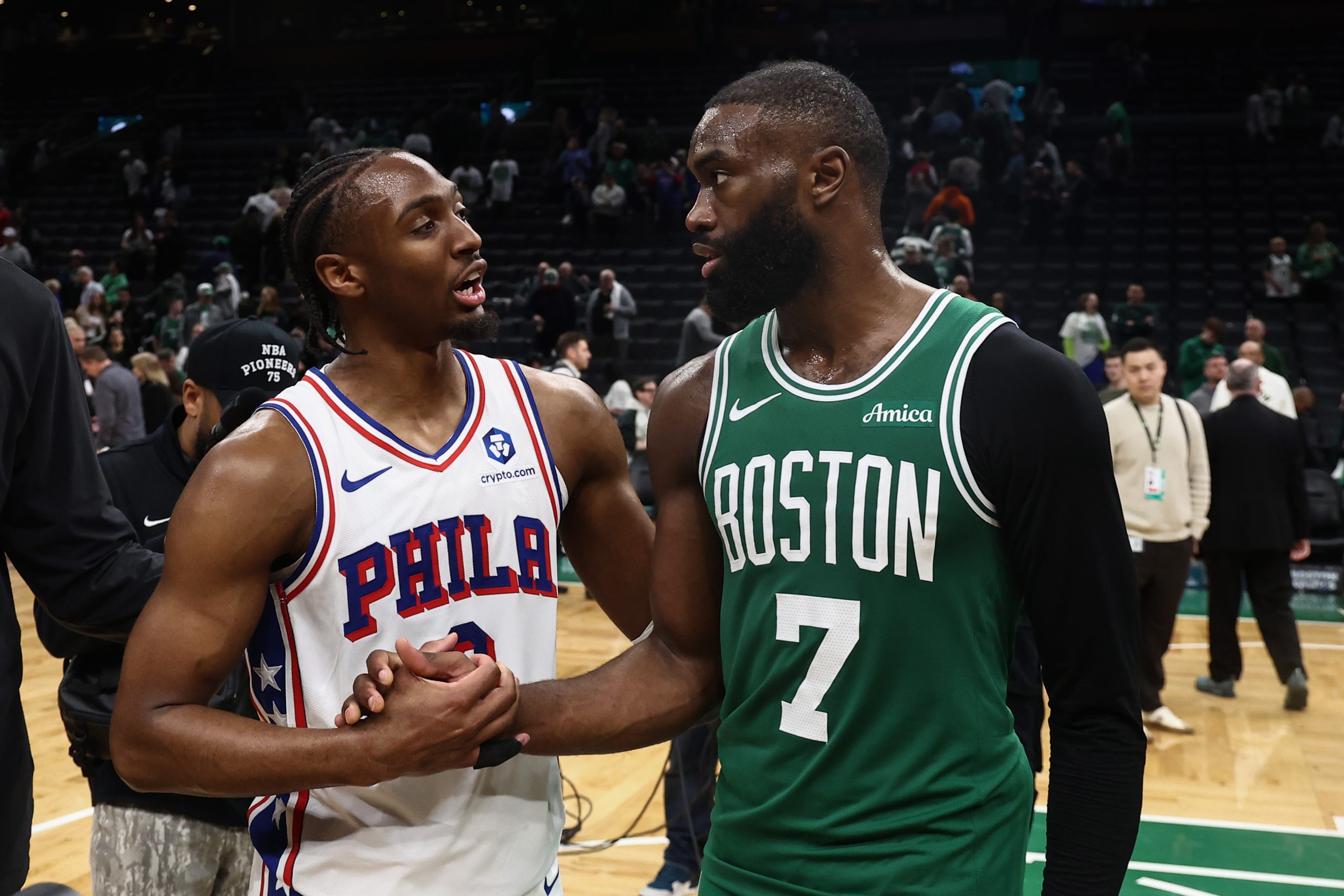
The Celtics already faced enormous scrutiny over trading one of the franchise’s all-time greats in the middle of his prime to the rival 76ers for a controversial return, including Paul George and two first-rounders. On Friday, LeBron James’ arrival in Philadelphia, a direct result of the move, placed the Sixers at the center of the basketball world and made them a challenging opponent the Celtics will face six times. Rich Paul later affirmed that the Jaylen Brown trade factored in James’ decision.
While now viewed as facilitators for the latest NBA super team, it’s easy to imagine Brad Stevens and the organization standing by the decision. Stevens already admitted the difficulty in trading Brown to a division rival following the move before deciding to do so anyway compared to alternative options, one from Golden State for Jimmy Butler and draft compensation emerging this week through multiple reports. The Celtics made their choice independently of where Brown went or what it caused — they want to progress with a depth approach.
“When I looked at our team and I looked at where the league was heading, looked at the way that we finished the last couple of years and also looked at the unbelievable way we played in the regular season the last couple of years,” Stevens said. “The path looked a little more challenging with 70% of our cap and such a high percent of our usage tied into two players. The reality in this era … of the NBA, and you could see it with the last couple of champions and some of the teams that were at the very top of the league … you have to do a great job … of building out depth that can hopefully replace the irreplaceable individual.”
Boston reinforced that approach with its other offseason moves, adding Mitchell Robinson to the mix with Neemias Queta and Luka Garza rather than adding a single high-cost center solution. They extended Jordan Walsh ahead of his restricted free agency next summer after he rode highs-and-lows last year. Payton Pritchard will inevitably receive an extension offer next when he’s eligible in October. The Celtics did not exert themselves by offering additional young players and draft capital to acquire Giannis Antetokounmpo.
While some details could emerge in the coming years over why the team didn’t land Antetokounmpo, despite its pursuit, and reportedly began the process of moving away from Brown as early as last year, Boston clearly drew from successes by New York, Oklahoma City, Indiana and others across recent seasons. Those teams leaned into utilizing various lineups, playing matchups against different lineups and opponents, while garnering max effort from having that many rotation players. At the moment, the Celtics have as many as nine wings between Jayson Tatum, Sam Hauser, George, returning bench players from last season and rookies Chris Cenac and Dillon Mitchell. Shooting wing Tucker DeVries joins that mix through a training camp invite.
“How are you going to replace (Brown)? You’re not going to,” Joe Mazzulla said earlier this month in Las Vegas. “Obviously, not only what he’s done in his career, but what he did this year, you don’t replace that … but there are two sides to it. We’ve also brought in people, right? So we have to have an understanding that we’re not asking anybody who comes back … to be anything what he was, because we’re not gonna do that, but they gotta be the best version of themselves, and they have to bring things to our team to try to help us become a better team.”
That could become easier said than done for the remaining members of the Celtics, Pritchard already cast by many as the potential scoring source in Brown’s place given how he performed with Brown off the floor in recent years. Hugo González, who struggled with efficiency in a larger Summer League role alongside flashes of improvement, joins Baylor Scheierman wearing the potential weight of expectations following Boston’s reported withholding of them from the Giannis negotiations.
Last year, in general, showed the limitations of relying on younger, less proven players, with Queta, Garza, Scheierman, Walsh, González and Ron Harper Jr. all thriving at times during the regular season before they universally experienced steps back into the playoffs. A last-ditch effort by Mazzulla in Game 7 to find something from all of them led to them combining for 0 points, aside from Queta’s 17 on that night. Tatum, of course, did not play on that night and only reached roughly 80% of his previous form in his return from an Achilles tear.
“He has been a leader for me, a role model,” González said at Summer League. “Everybody here is grateful for him, and after that, it’s just try to look forward, try to see what’s coming and from here, try to get better … (the trade rumors) were tough, but it’s something when you come to the NBA, you know that can happen.”
There’s hope that Tatum at 100% and continued internal growth like González’ could keep them in the championship conversation. It would be forecasting a lot.
The Celtics outlined an additional path forward through their now five first-round picks that can be included in trades, including a potential unprotected Clippers selection in 2028 that already looks intriguing. They have George’s contract as an expiring next summer, and generated a greater array of salaries to get various trades done next year. They’ll also inevitably be free from repeater luxury tax penalties. There’s a world where another year of development along with a short-term ceiling raised by Tatum’s all-around skills allow Boston to smoothly bridge to its next championship era sooner rather than later.
That, however, appears at least one year away and could hinge on outside opportunities happening. One like the Antetokounmpo trade sweepstakes that already sat in front of them. A longer outlook where the Celtics have to draft-and-develop through the arrival of the 2028 pick exists, which places both Tatum’s career and Boston timelines into question. And more immediately, any success the 76ers experience in the near term will draw further scrutiny toward the Celtics as they try to play a more patient, sustainable and slow game than their rivals.
It’s one that not even Stevens assured is absolutely right, one that Bill Chisholm said took some convincing on Stevens’ part and that the NBA world is trying to wrap its head around nearly one month later. Offseason champions like the Heat and 76ers don’t always win the title the following June, but independent of them, the Celtics chose a risky process. It could be one they felt they had no choice over. But one they’ll still be judged on quickly.
“It was a really hard call,” Stevens said. “I’m not saying it was the right call and we wanted to stay good, and we wanted to add more optionality.”
