

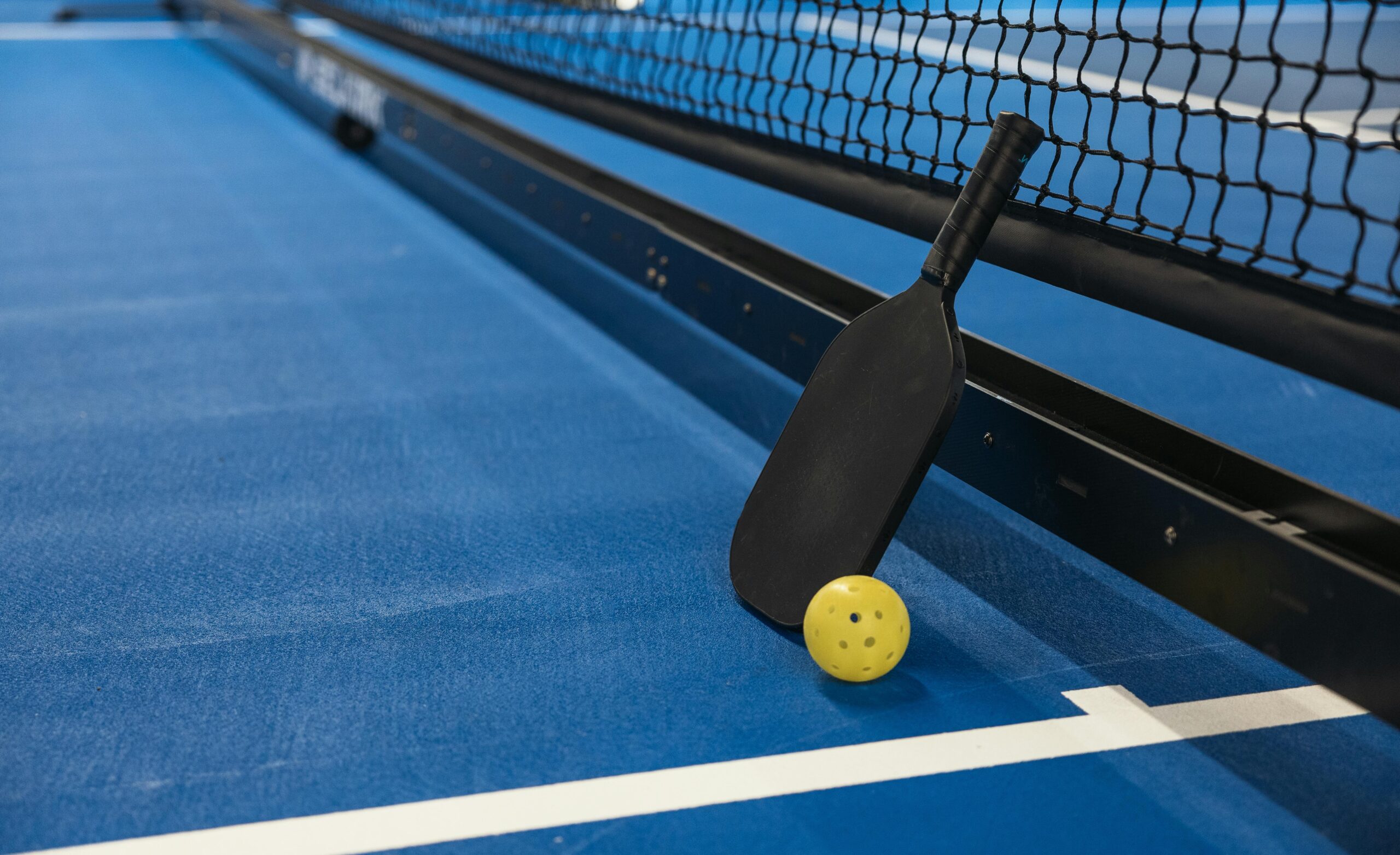
Pickleball is considered a fairly new sport, but in actuality, it originated back in 1965 with three bored dads looking for a fun, summer activity for their families.
They played on an old badminton court, with ping pong paddles, and a perforated plastic ball (basic plastic ball with holes). The net was lowered to make the game more playable, and as one thing led to another, the rules for pickleball were developed by the trio.
Since then, pickleball’s popularity has rapidly grown, and it’s today considered one of the fastest-growing sports in the whole world.
The Numbers
Pickleball has been around for almost 60 years, but its popularity has grown in the last five years.
The shift came with the COVID-19 pandemic in 2020 and restrictions that pushed people to find new outdoor activities. According to the Sports and Fitness Industry Association (SFIA), participation grew by 21% in 2020, with 4.2 million Americans playing the sport at least once. Three years later, the number of participants had tripled to 13.6 million players.
The main factors in its growth are accessibility and simplicity. In comparison with tennis, which requires more time investment and even lessons to learn, pickleball can be learned in a few hours.
Another bonus in comparison with tennis is the lower cost. Pickleball equipment is usually cheaper than tennis gear, with quality paddles priced for under $100 and balls costing a few dollars.
Court Expansion & Infrastructure
With growing participation numbers, cities and recreation centers had to quickly respond to rising demand and start construction of courts and convert underused or older tennis courts.
The 2024 USA Pickleball Annual Growth Report shows that more than 18,000 new courts were added in only one year, which brought the nationwide total to 68,458 (a 35.7% increase in one year alone).
Tournaments & Professionalization
With a rapid rise in players, the next natural progression is the competitive scene. And the numbers don’t disappoint.
In 2024 alone, USA Pickleball held 142 tournaments (this includes the Biofreeze USA Pickleball
Championships). That event drew more than 2,600 players from 47 states and 13 counties, 10,000 spectators, and added a staggering $3.6 million (USD) to the local economy — event and tourism.
Also, the professional side of the sport expanded. Last year, organizations like Professional Pickleball Registry (PPR) and Pickleball Coaching International (PCI) trained thousands of new instructors.
Sports growth drew media attention, with major media and sports outlets like Forbes, Sports Illustrated, and The Wall Street Journal covering pickleball extensively.
A Sport Blind to Age and Ability
Part of pickleball’s appeal is in its age inclusivity.
Baby boomers and retirees are playing it as a low-impact sport, and young athletes see it as a fast-paced, social alternative to tennis. Also, it became a popular family activity that can be played with parents, grandparents, and children.
But pickleball isn’t only age-inclusive; the 2024 Biofreeze USA Pickleball National
Championships introduced a wheelchair division to provide even bigger accessibility. Also, USA Pickleball has supported numerous youth-focused projects and veteran initiatives to make sure the sport continues to grow, and also supports and includes the whole community.
Gear Innovations
Since the sport grew rapidly, so has the technology around the pickleball equipment. Manufacturers started innovating with materials and designs to improve overall performance and comfort while playing. Last year alone, there were 1,713 new submissions tested and 1,225 new paddles approved.
Todd Skezas, the CEO of Pickleball Nation, accurately noted: “CRBN has redefined what foam-core technology can achieve in pickleball paddles, delivering a groundbreaking combination of consistency, touch, power, and durability that sets this line apart from anything else on the market.”, portraying just how seriously pickleball has been taken with so many branded companies investing big into technology to make the sport even better and more competitive.
Tensions with Tennis
With its rapid growth, tennis players and clubs have expressed concern over court conversions, and that increased pickleball adoption will lead to reduced opportunities for tennis players.
Even the tennis pros are expressing concern. After a Wimbledon match last year, Novak Djokovic said that there’s potential that pickleball and padel could ‘endanger’ tennis in the future.
The reason behind that is financial gain to the clubs that are converting one tennis court into three padel and pickleball courts.
The Growing Pickleball Community
The growing pickleball community counts over 50 million people worldwide, and has reached over 70 countries – 77 according to the IPF (2025) to be precise – and over 5 million international players.
In the US alone, last year (2024), there were roughly 19.8 million players. Dedicated to growing the USS pickleball community, there is the USA Pickleball Ambassador Program, which has over 2000 active ambassadors promoting the sport in schools, neighborhoods, and community centers.
The future of this sport is even brighter.
Facilities are expanding, gear and equipment are evolving, and tournaments are drawing more and more national attention.
Additionally, the global pickleball market is expected to grow to 9.1 billion by 2034, with an annual growth rate of over 15%, according to Market.us.
Conclusion
Pickleball has now moved way beyond just being casual, and it has proven it isn’t just a fleeting trend.
It may have started as a family entertainment, but pickleball today holds the number one spot as the fastest-growing sport in America. And it’s electrifying just thinking about how the sport will shape itself in the future.
